Home » Blog » Best Virtual Data Rooms for IPO in 2026
Best Virtual Data Rooms for IPO in 2026
An IPO is the single most document-intensive event a company will go through before it is public. The audience is not a buyer sitting across the table – it is a syndicate of underwriters, their outside counsel, auditors preparing comfort letters, SEC reviewers, exchange regulators, and eventually the institutional investors who will set the pricing on the day your company lists. Every one of those parties needs controlled, auditable access to different documents, at different times, under different retention requirements. IPO proceeds rose 52% year-over-year in 2025 despite a Q4 slowdown caused by an SEC filing shutdown, and the 2026 pipeline across Nasdaq and NYSE has recovered sharply. The market conditions are there. What separates companies that close on schedule from those that slip their window is operational readiness – and a significant part of that readiness is the quality of the virtual data room.
This guide covers the six virtual data rooms that are actually built for IPO-scale requirements, explains what separates them, and gives you the framework to make the right call before your process starts.
Quick Answer
The best virtual data room for IPO preparation in 2026 is Ideals for companies that want self-service setup with enterprise-grade controls, or Datasite and Intralinks for large-cap offerings where institutional brand recognition is a factor for the underwriting syndicate. For teams that want SEC filing integration built directly into the data room, Venue by DFIN connects document management to the S-1 workflow without manual re-uploads. For AI-assisted readiness scoring, Ansarada (now part of Datasite) remains the strongest dedicated tool. For mid-market IPOs that need hands-on coordinator support, EthosData handles the administrative burden directly.
Post-download IRM controls + Fortune 1000 track record
ISO 27001ISO 27701GDPR
Ansarada
AI-driven IPO readiness scoring
Storage-based (~$499+/mo)
Prep phase
AiQ bidder/reviewer engagement scoring
ISO 27001SOC 2ISO 42001
Venue (DFIN)
SEC-regulated IPO with S-1 filing integration
Quote-based
No
ActiveDisclosure integration — docs flow from VDR to SEC filing
ISO 27001SOC 2
EthosData
Mid-market IPO with coordinator support
Quote-based
Yes
Dedicated coordinator + remote shredding
ISO 27001SSAE 16ISAE 3402
Why an IPO Data Room Is Different from Any Other
Most companies that have run a Series B or a pre-acquisition due diligence process assume their existing VDR setup will carry over to an IPO. It rarely does.
An IPO data room operates under a different set of constraints. The SEC’s 135-day rule means that financial statements disclosed in the S-1 cannot be more than 135 days stale at the time of pricing – which forces a fixed disclosure calendar that the data room must accommodate with time-locked document releases. Every change to a financial figure that appears in the prospectus must be traceable to a numbered exhibit in the data room through per-page audit logs, not just folder-level access records. The three-layer due diligence structure – underwriter business due diligence, legal and securities diligence, and auditor comfort-letter diligence – requires segregated access with different user groups and different document retention rules for each.
The SEC’s own guidance on IPO preparation reflects the documentation depth required: financial statements, governance records, material contracts, intellectual property assignments, litigation disclosures, and regulatory compliance documentation must all be accessible to multiple parties simultaneously while remaining under tight access control.
A data room that handles a 50-investor Series B process is not automatically equipped for an IPO where the syndicate, outside counsel, and auditors are all reviewing different document sets under different NDAs at the same time.
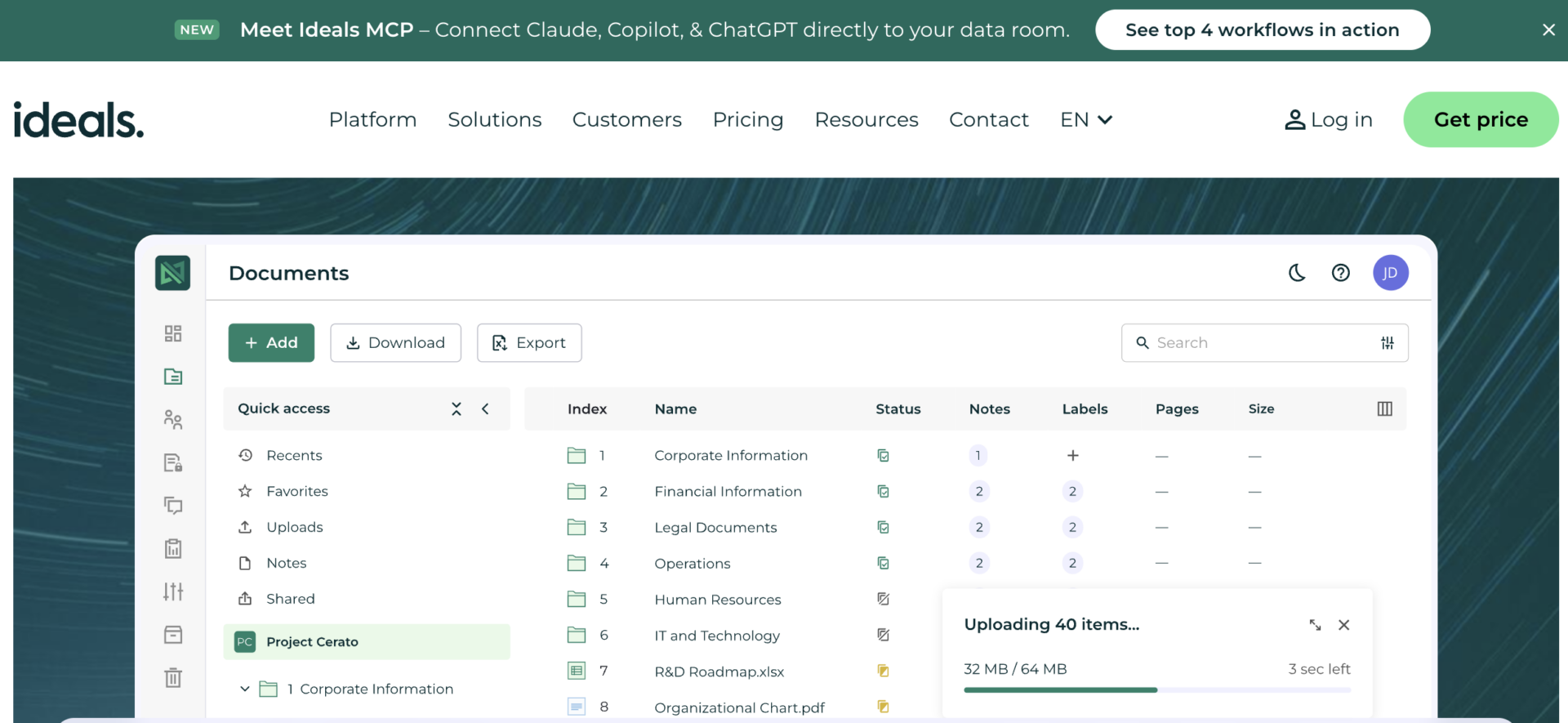
Ideals has built a strong position in IPO workflows precisely because it handles the complexity that comes with multiple simultaneous stakeholder groups without requiring a dedicated administrator to manage it. The permission system is granular enough to segregate underwriter access from auditor access from legal counsel access — all within the same room — and the activity tracking gives the internal deal team a real-time picture of who is reviewing what and where bottlenecks are forming.
The platform supports over 175,000 companies globally and handles IPO processes across jurisdictions, with interface support in more than 15 languages. For cross-border listings — a Nasdaq listing by a European company, for example, or a Hong Kong offering by an Asian company with US legal counsel — that multilingual capability reduces the friction that typically accumulates as external advisors navigate an unfamiliar interface.
Where Ideals has moved ahead of most VDR providers is in AI integration. The platform now supports Model Context Protocol (MCP), a secure bridge that lets Claude, ChatGPT, or Microsoft Copilot operate directly inside the data room. In practical terms, a deal team member can prompt their AI assistant to check whether the VDR is complete against IPO best practices, find all documents referencing a specific clause, identify the five most commercially sensitive Q&A questions for management to prioritize, or pull seven-day engagement data on which underwriters are spending the most time in the financials section — and the assistant executes those tasks inside the data room securely, with a full audit trail. For an IPO process where speed of information synthesis directly affects the timeline, that capability is a meaningful operational advantage over platforms where AI assistance stops at the data room’s door.
Ideals holds ISO 27001, SOC 2 Type II, and GDPR certifications. It offers a free trial and is one of the few enterprise-grade platforms where a company can set up a functional data room without a week-long sales and onboarding cycle. The Q&A module, permission templates, and audit trail system all meet the requirements that underwriting counsel expect during IPO diligence.
Best for
Mid-to-large cap IPO preparation, cross-border offerings, companies that want to start with a functioning room quickly rather than waiting for an enterprise onboarding cycle
2. Datasite — Best for Large-Cap Offerings and Bulge-Bracket Mandates
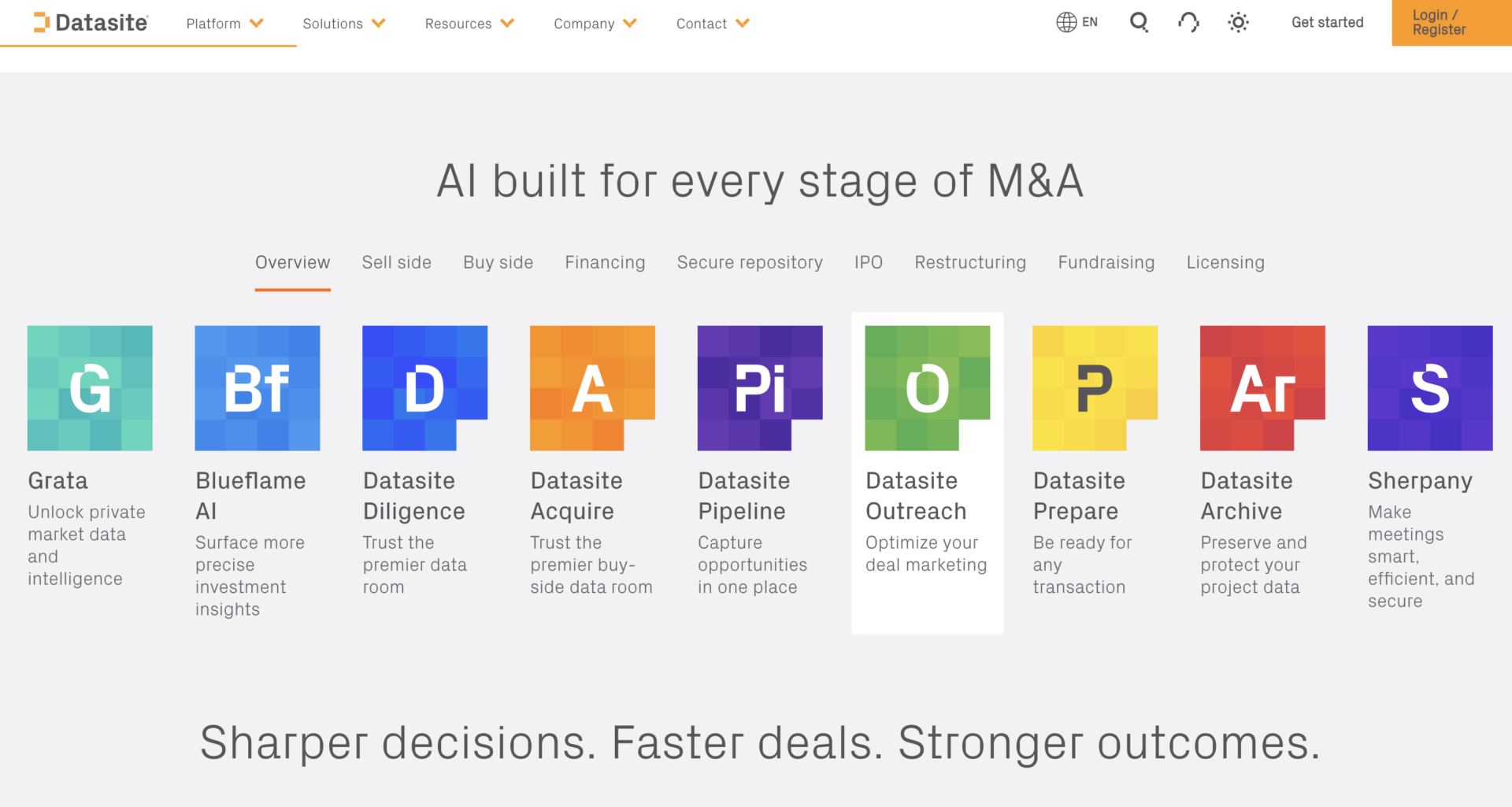
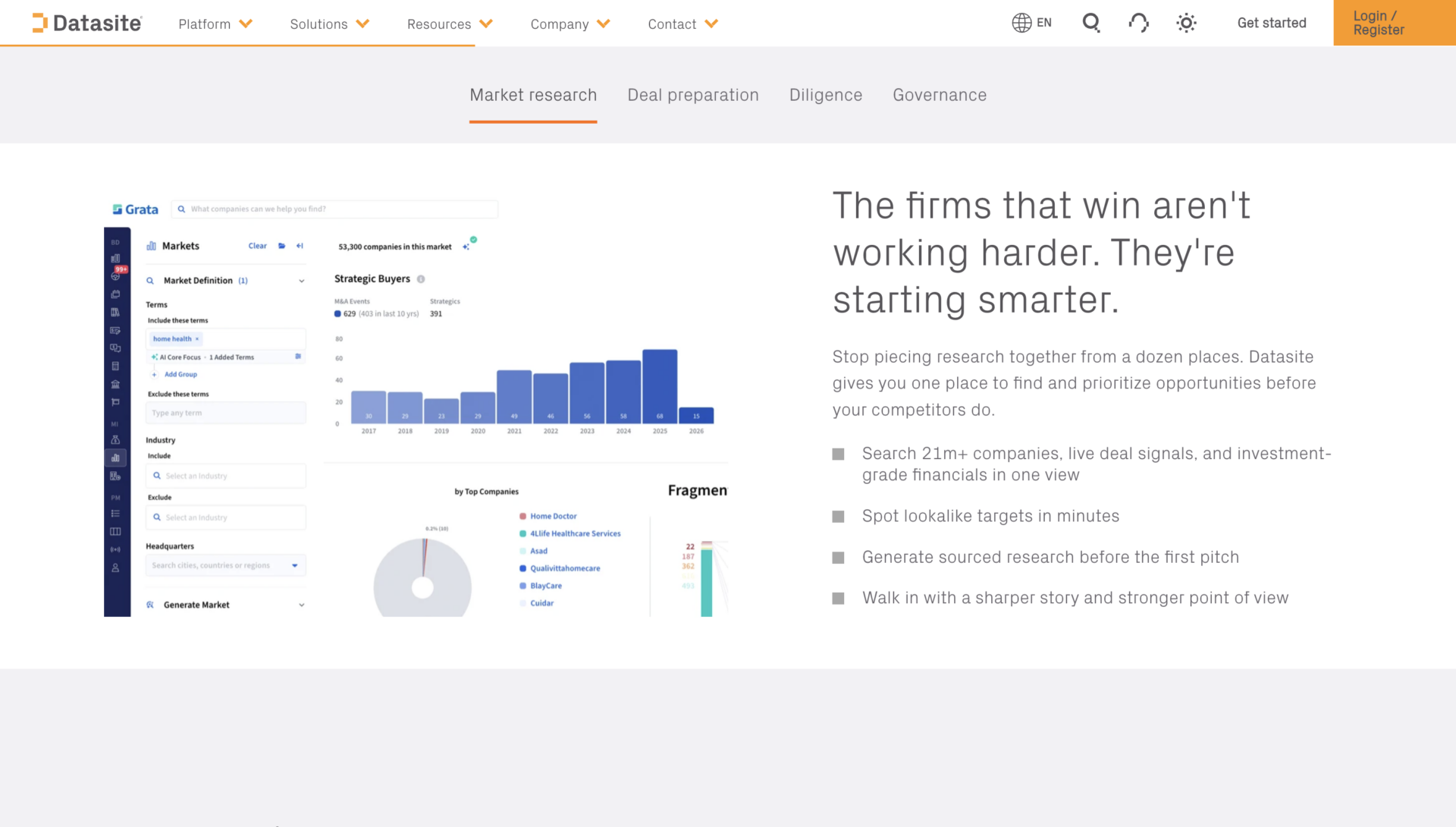
Datasite is the reference platform for large-cap M&A and IPO processes where the deal team works alongside Goldman Sachs, Blackstone, or Morgan Stanley. Its AI redaction engine automatically identifies and strips over 100 types of personally identifiable information across thousands of documents — a capability that matters when the due diligence document set runs into tens of thousands of pages. The analytics dashboard tracks reviewer engagement at a granularity that helps sell-side advisors identify which institutional investors are spending serious time in the financials section versus those who have barely opened the room.
One important note for teams evaluating Datasite: the platform acquired Ansarada in August 2024 for approximately AUD $240 million. Ansarada continues to operate independently under its own brand, but both products now sit under the same parent. For buyers, this means the two platforms are effectively part of the same ecosystem — though their pricing models, interfaces, and support structures remain distinct for now.
Datasite does not offer a free trial. The per-page pricing model can generate significant costs on document-heavy IPO processes: at roughly $0.60 per page on a transaction with 50,000 pages of supporting materials, that is $30,000 in page fees before user licenses or support tiers are added. For a large-cap offering where the banking fees dwarf the data room cost, this is a non-issue. For a smaller company preparing for a mid-market IPO, it is worth modeling the total cost before signing.
Best for
Large-cap IPO processes, bulge-bracket bank mandates, deals where Goldman/Blackstone credibility on the counterparty side matters
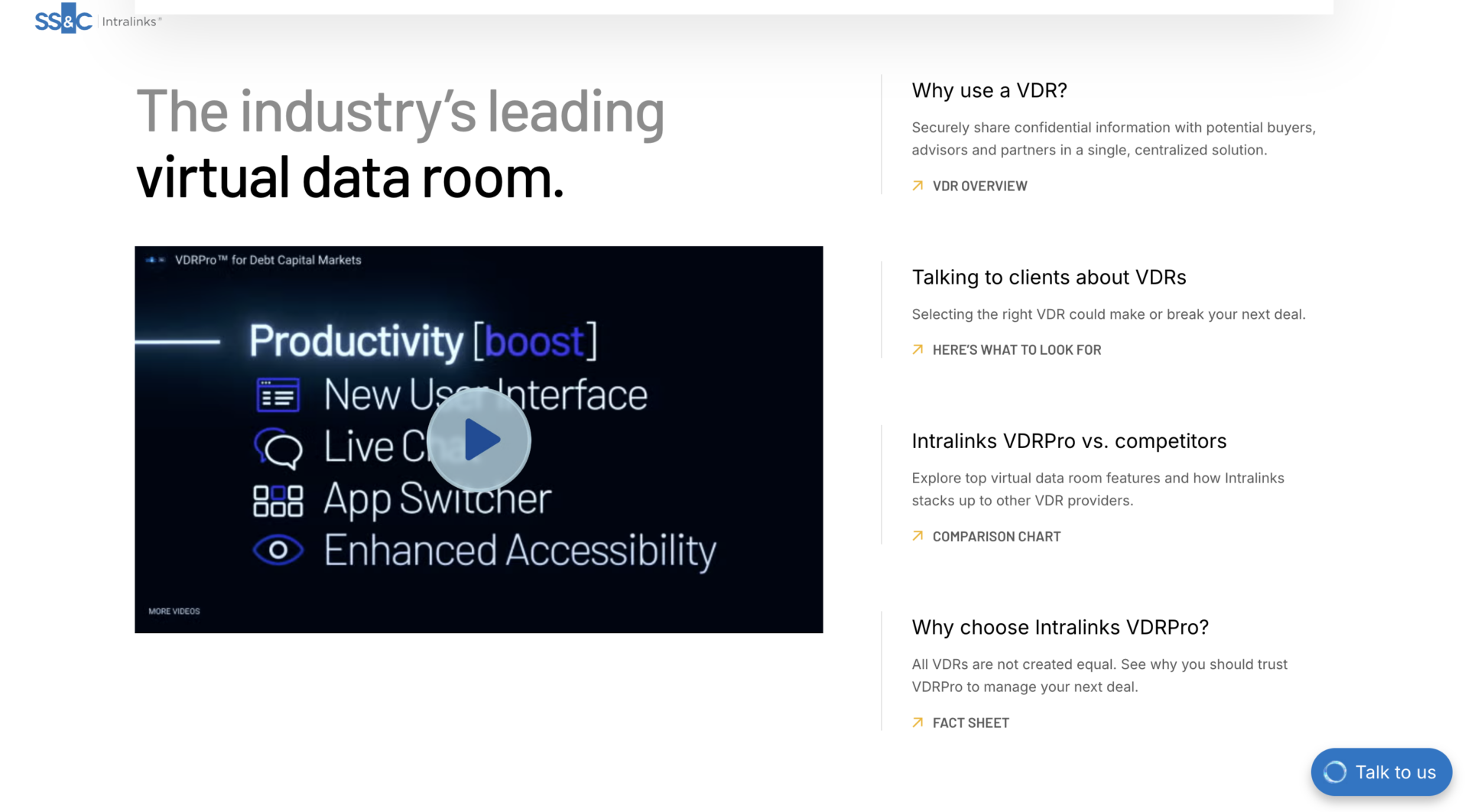
3. Intralinks — Best for Capital Markets and Syndicate Workflows
Intralinks has been the standard platform for capital markets transactions for decades, and its deep integration with IPO syndicate workflows is the reason it remains on the shortlist despite a less intuitive interface than newer alternatives. The platform’s post-download IRM (Information Rights Management) controls – the ability to revoke access to documents that have already been downloaded – are among the most comprehensive in the market. For an IPO process where preliminary prospectus materials need to be shared with institutions before the full S-1 is filed, and then recalled if market conditions cause a delay, that capability is not optional.
Intralinks supports 16 user roles with granular access tiers and a “View As” feature that lets administrators preview exactly what each party sees before sharing. Its capital markets and IPO workflow tools include time-locked document releases that align with the SEC’s disclosure calendar requirements. The platform is trusted by 99% of Fortune 1000 companies according to SS&C’s own reporting.
The honest trade-offs: setup is slow by modern standards, the interface draws consistent criticism from users who have worked with newer platforms, and integration capabilities are limited. G2 reviews from investment banking professionals reflect a pattern where the platform is chosen for institutional credibility rather than usability. For a company whose underwriting bank specifies the VDR vendor, Intralinks remains a standard answer. For a company making its own choice, there are more capable options.
Best for
Capital markets transactions, large-scale IPO syndicate workflows, listings where underwriting counsel specifies the VDR vendor
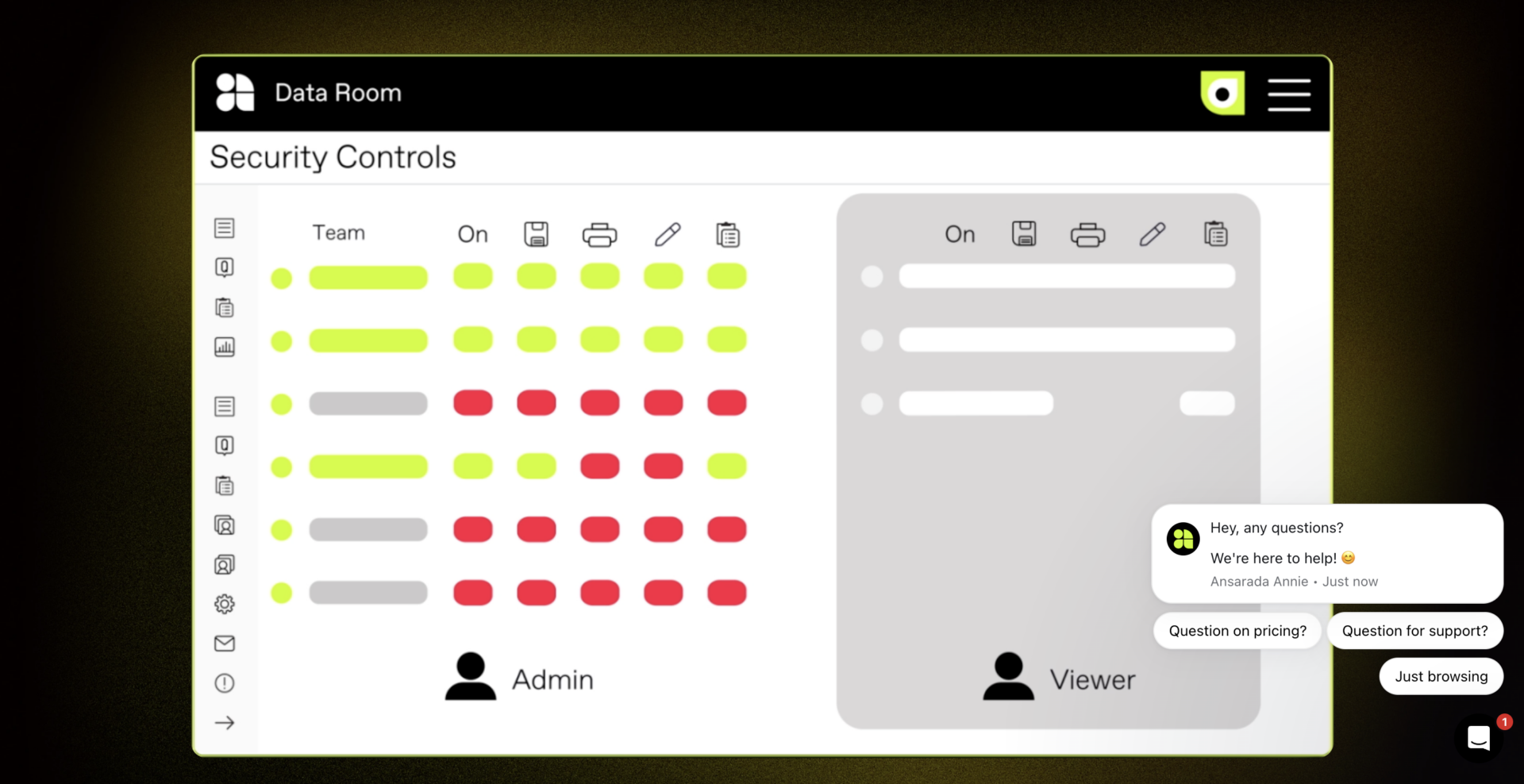
Ansarada’s core value proposition in an IPO context is its readiness scoring engine. Before the room opens to underwriters and legal counsel, the platform evaluates whether the document set is complete, flags missing materials, and identifies gaps that typically slow due diligence. For a CFO or general counsel preparing a first-time IPO process, that systematic readiness check replaces a significant amount of manual pre-work that would otherwise fall on internal staff or external advisors.
The AiQ engagement scoring system tracks how reviewers – underwriters, institutional investors, legal counsel – interact with documents and predicts which parties are engaging seriously versus passively. During the investor roadshow phase of an IPO, that behavioral signal is useful for prioritizing where management time goes.
Ansarada is now owned by Datasite following the August 2024 acquisition. The platform continues to operate independently, but buyers should factor in that the long-term product roadmap, pricing structure, and support model are now governed by Datasite’s ownership. The storage-based pricing model – approximately $499/month for 250MB – can become expensive quickly on an IPO document set that runs into gigabytes. For teams that can discipline their document uploads to what is essential rather than everything available, the pricing is manageable.
Best for
Companies preparing for IPO who want AI-driven gap analysis before opening the room to external parties
Pricing model
Storage-based ~$499/mo for 250MB ~$2,499/mo for 4GB
5. Venue by DFIN — Best for SEC-Integrated IPO Workflows
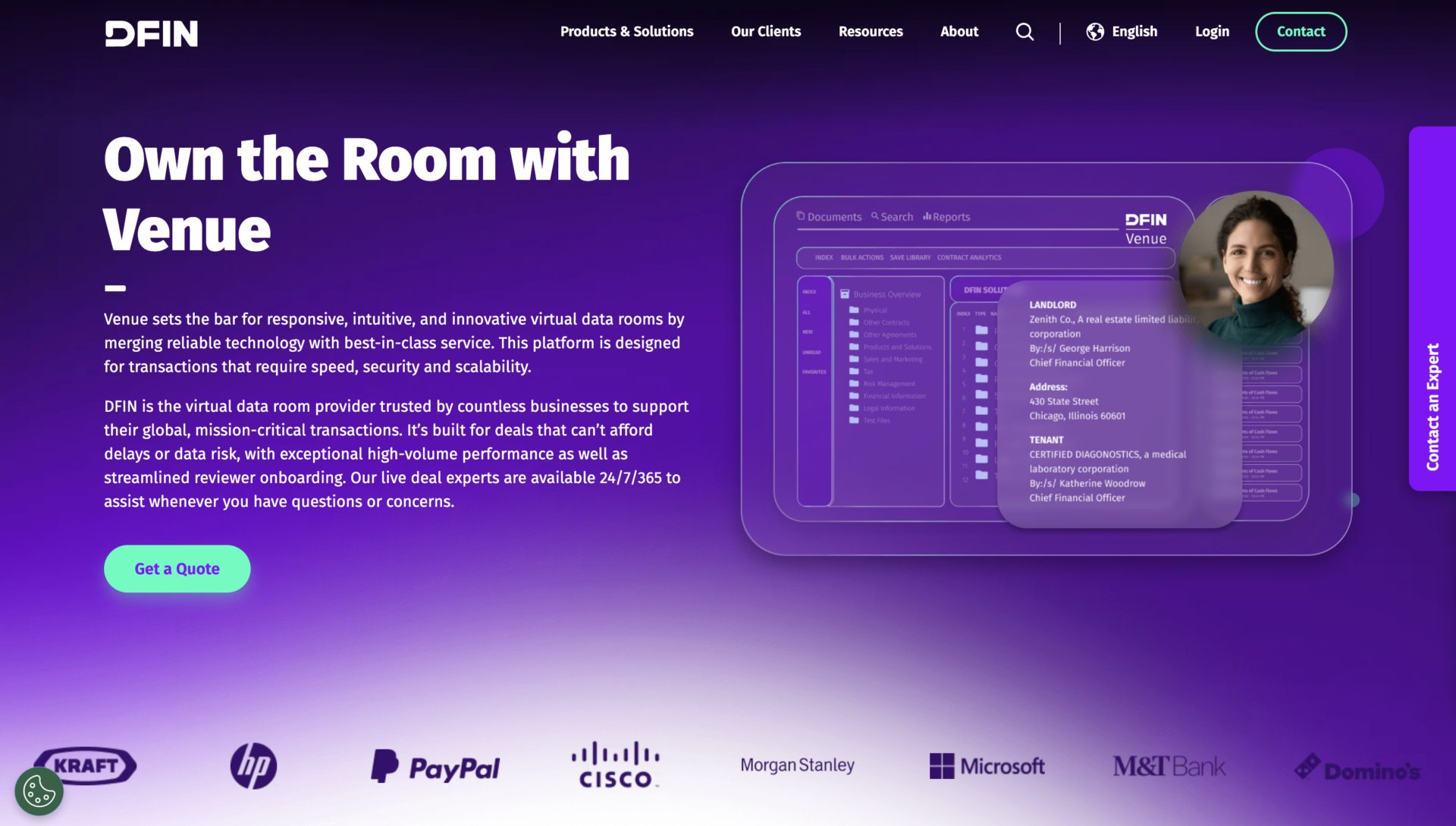
Venue is the virtual data room product of Donnelley Financial Solutions (DFIN), and its distinguishing feature in an IPO context is its integration with DFIN’s ActiveDisclosure platform for SEC filings. Documents prepared and reviewed in the data room move directly into the S-1 filing workflow without manual re-uploads — a connection that reduces the version-control errors that typically accumulate when IPO teams are manually transferring documents between a data room and a filing tool near the pricing date.
For companies already using DFIN’s compliance ecosystem, Venue extends that infrastructure into the due diligence phase. For companies that are not in the DFIN ecosystem, the platform still performs well as a standalone VDR for IPO processes — with full-text search, granular permissions, audit trails, and Q&A functionality — though the SEC integration is less valuable in isolation.
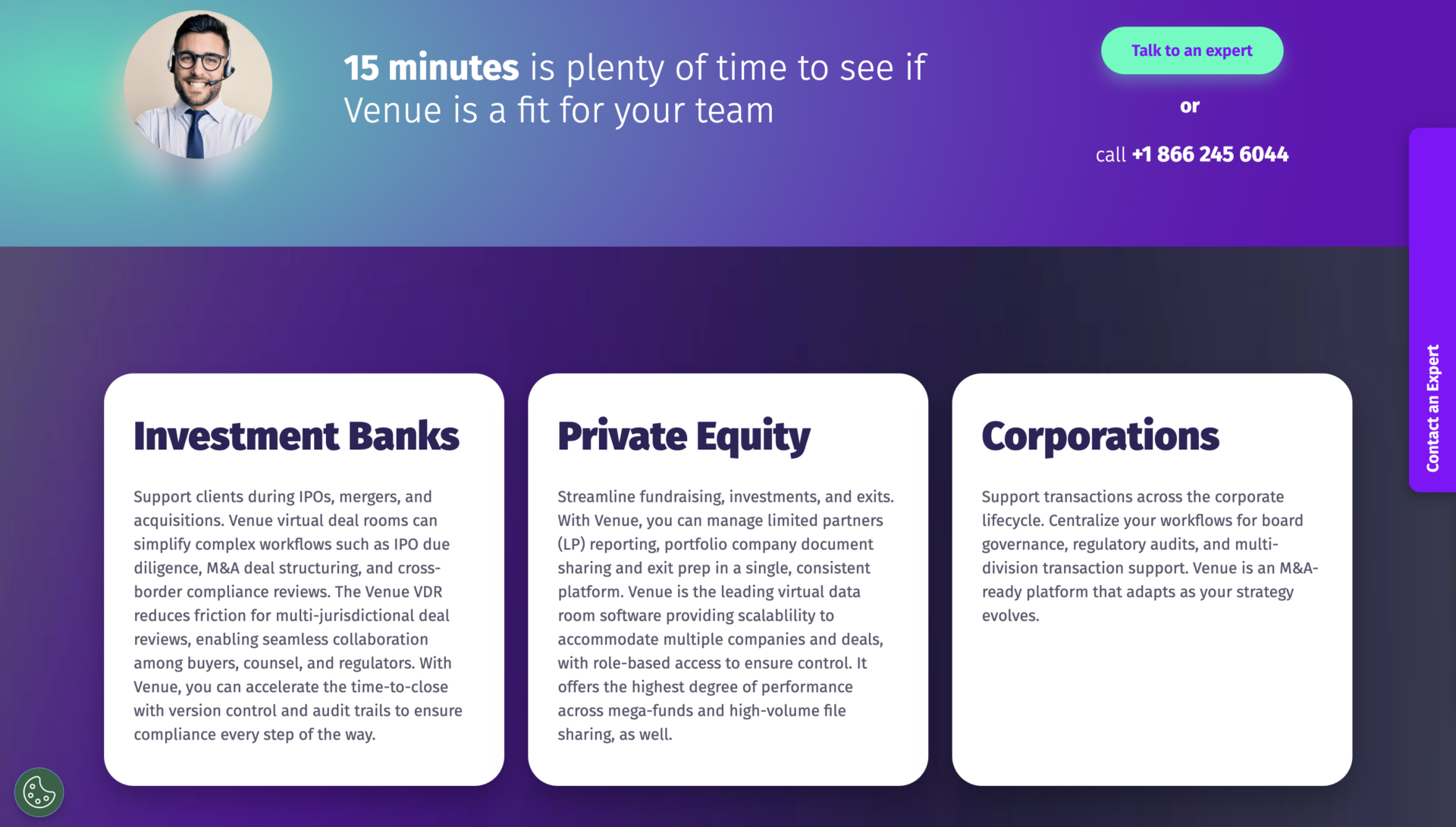
Venue’s pricing is quote-based and typically bundled with other DFIN compliance products. It does not offer a self-service free trial. The platform is best evaluated through a demo that includes the ActiveDisclosure integration, since that is where its differentiation from Ideals, Datasite, and Intralinks is clearest.
Best for
Companies preparing a US IPO that are filing an S-1 and want document management and regulatory filing to operate as a single workflow
6. EthosData — Best for Mid-Market IPO with Hands-On Support
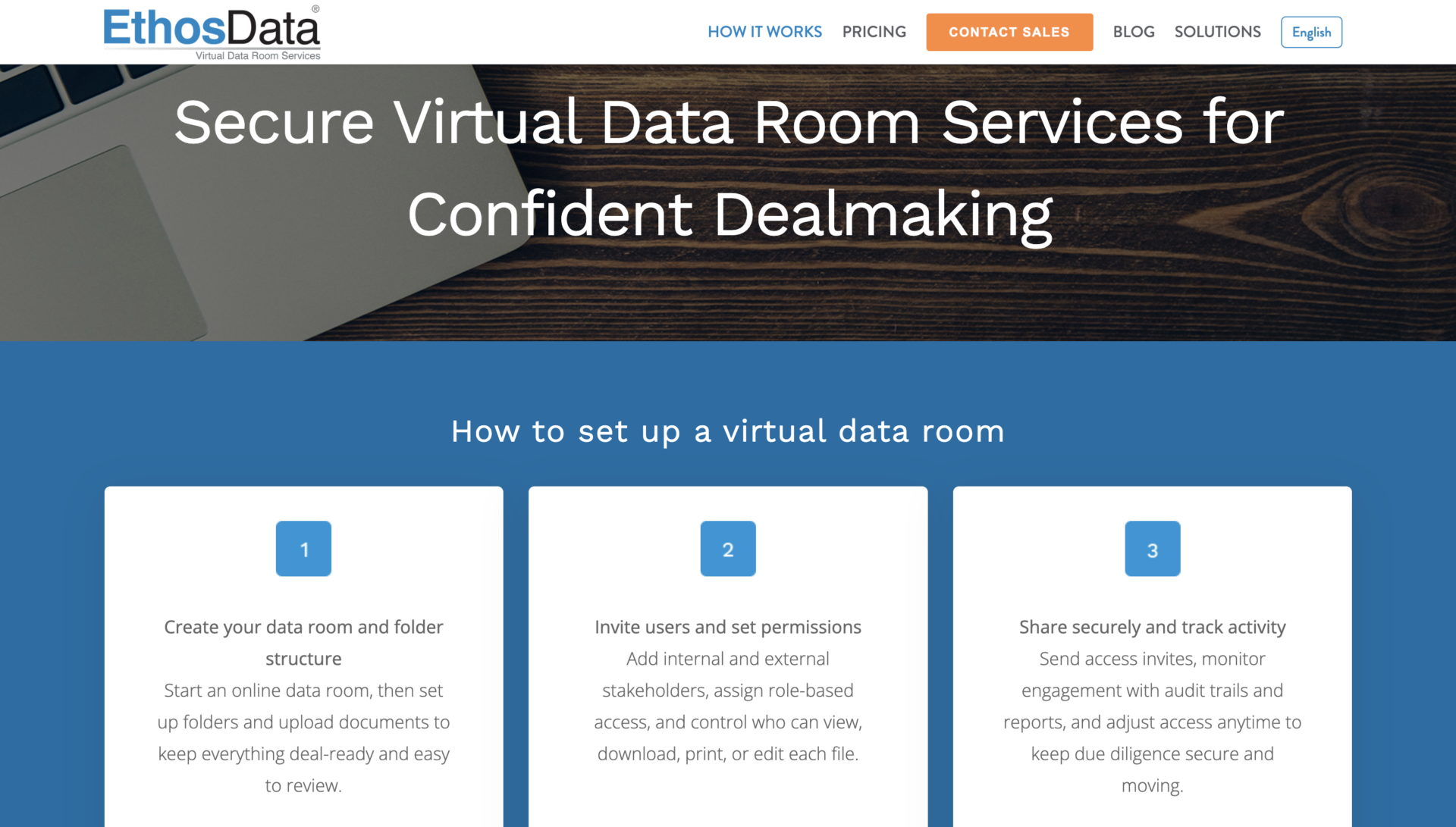
EthosData is not the most obvious name in an IPO context, but it fits a specific scenario well: a mid-market company preparing for a regional or secondary exchange listing that wants the document control and audit trail quality of an enterprise VDR without the complexity of configuring Datasite or Intralinks from scratch. The platform’s dedicated data room coordinator handles setup, user onboarding, and permission configuration directly — which matters when the internal team is simultaneously managing the underwriter relationship, the legal review, and the business itself.
The remote shredding capability — revoking access to downloaded documents — is relevant in IPO preparation when draft prospectus materials shared with underwriters before the S-1 is filed need to be recalled or updated after a material change. EthosData holds ISO 27001, SSAE 16, and ISAE 3402 certifications, meeting the compliance standards that investment banks and law firms expect.
EthosData was acquired by Ideals in October 2024 and continues to operate under its own brand. For founders comparing EthosData and Ideals directly: Ideals is self-service with broader analytics; EthosData delegates the administrative management to a coordinator. The right choice depends on whether the internal team has bandwidth to manage the data room or would benefit from external coordination.
Best for
Mid-market IPO preparation, companies that want coordinator-managed data room setup, cross-border listings where language and support accessibility matter
The document categories in an IPO data room follow the structure of underwriter due diligence, which covers business, legal, and financial review simultaneously. The list is longer and more specific than a Series B data room, and the version-control requirements are stricter because every material update to a disclosed document must be traceable.
What Documents Go in an IPO Data Room: Complete Checklist by Category
One of the most common operational failures in IPO preparation is starting the data room too late. The room is typically opened to underwriters 8 to 12 weeks before the anticipated filing date – but the document collection, indexing, and permission structuring that makes the room usable takes 4 to 6 weeks before that.
A realistic timeline for a mid-market IPO:
IPO VDR readiness timeline
T-6 months
Select VDR vendor. Begin document collection. Set up folder structure and permission templates for each stakeholder group: underwriter counsel, legal counsel, auditors, and management.
T-4 months
Upload core document set. Complete initial gap analysis. Run readiness review internally before opening the room to advisors.
T-3 months
Open the data room to underwriters and their counsel for business and legal due diligence. Launch the Q&A module.
T-8 weeks
Open auditor access for comfort letter diligence. Keep auditor permissions separate from legal and underwriter groups.
T-4 weeks
File the first S-1 draft. Align the data room with the filing and lock version control. Track any document changes after this point and reflect them in the filing where needed.
T-2 weeks
Lock the room for non-essential changes before pricing. Confirm final comfort letters. Retain access logs for post-IPO disclosure and audit requirements.
What to Ask VDR Vendors Before Your IPO
Most VDR sales conversations default to feature demonstrations. For an IPO, the questions that matter are more specific:
Can your audit trail log per-page access rather than per-document access? (Required for comfort letter traceability.)
Can you support time-locked document releases tied to specific calendar dates? (Required for 135-day rule compliance.)
Can you create segregated access groups with different retention policies within the same data room? (Required for three-layer diligence structure.)
Can you revoke access to already-downloaded documents? (Required when draft materials are recalled after material changes.)
What is your process if your platform experiences downtime within 72 hours of a pricing date?
Does your pricing model change if document volume grows significantly during the process?
The answers to these questions separate platforms that support IPO workflows from those that are built for simpler due diligence scenarios.
Alternatives to a Full Enterprise VDR
For companies at the pre-IPO preparation stage – 12 to 18 months before an anticipated listing – a full enterprise VDR with IPO-specific workflows may be more platform than is currently needed. During the pre-IPO period, when the work is primarily internal document organization and board-level governance rather than external party review, the mid-tier platforms covered in our VDR pricing guide offer sufficient capability at a lower cost, with the understanding that the platform will need to be upgraded or replaced when the formal IPO process begins and underwriting counsel is engaged.
The key is not to start the IPO process on a tool that cannot handle the access control complexity of a live offering – switching VDR vendors mid-process is a real operational risk when the document set has already been indexed and shared with multiple external parties.
Glossary
IPO (Initial Public Offering)
The process by which a private company offers shares to the public for the first time, usually through a listing on a national stock exchange, to raise capital and establish a public market for its securities.
S-1 filing
The registration statement required by the SEC for companies seeking to list on a US stock exchange. It includes audited financial statements, business description, risk factors, management background, and use of proceeds.
135-day rule
A financial statement staleness rule that affects the IPO disclosure calendar. In practice, financial statements used in an S-1 must remain current enough for SEC filing and effectiveness timelines, which can force updates if the offering schedule slips.
Underwriter due diligence
The investigation conducted by investment banks acting as underwriters to verify the accuracy of information in the registration statement before committing to sell the offering to the public.
Comfort letter
A letter issued by an auditor to the underwriters confirming that selected financial information in the prospectus is consistent with the company’s financial records and that specified procedures have been performed.
IRM (Information Rights Management)
Technology that controls access to documents after they have been downloaded from a data room, including restrictions on printing, copying, forwarding, and access revocation where supported.
Roadshow
The investor presentation process that takes place between the S-1 filing and the pricing date, during which management presents to institutional investors. Some investors may require controlled access to financial data during this period.
Lock-up agreement
An agreement that restricts insiders and early investors from selling their shares for a defined period after the IPO, often 180 days, depending on the transaction structure and underwriting terms.
Virtual data room (VDR)
A secure, cloud-based platform for storing, organizing, and sharing confidential documents with controlled access, granular permissions, and audit trails. In an IPO context, the VDR serves as the central workspace for parties involved in the offering process.
Audit trail
An automatically generated log of activity inside a data room, including who accessed which document, when the access occurred, what action was taken, and whether administrators changed permissions.
Frequently Asked Questions
Frequently Asked Questions
A virtual data room for IPO is a secure, cloud-based platform used to organize, store, and share the confidential documents required during the IPO process — with underwriters, legal counsel, auditors, and regulators. It provides controlled access, per-page audit trails, Q&A workflows, and the version control needed to satisfy SEC disclosure requirements and underwriter due diligence standards.
Ideals is the strongest all-around choice for IPO preparation, covering multi-party access control, per-page audit trails, Q&A workflows, and 24/7 multilingual support. Datasite and Intralinks are the standard answers for large-cap listings where bulge-bracket banks are involved. Venue by DFIN is the best option if S-1 filing integration matters. For mid-market offerings with coordinator support, EthosData fits.
An M&A data room serves one buyer or a limited syndicate. An IPO data room serves multiple simultaneous stakeholder groups — underwriters, legal counsel, auditors, and eventually institutional investors — each with different access rights and different document retention requirements. IPO rooms also need to accommodate the SEC’s 135-day rule for financial statement staleness, time-locked document releases, and per-page audit trails for comfort letter traceability.
Document collection and room structuring should begin 4 to 6 months before the anticipated S-1 filing date. The room is typically opened to underwriters and their counsel 3 months before filing. Starting later than this compresses the diligence timeline and increases the risk of missing material documents that need to appear in the registration statement.
At minimum: audited financial statements (3+ years), corporate governance records, board minutes, shareholder and voting agreements, cap table, material contracts, IP assignments, employment agreements for key employees, litigation disclosures, regulatory approvals, draft S-1 and all subsequent amendments, comfort letters, and underwriting agreements. The exact list expands based on the company’s industry and the exchange requirements for the listing.
For enterprise IPO platforms: Datasite and Intralinks typically run $25,000 to $100,000+ per year on a large offering, with Datasite’s per-page model generating significant cost on document-heavy processes. Ideals is subscription-based with pricing on request and is generally more cost-efficient than Datasite or Intralinks for comparable functionality. EthosData is quote-based with a free trial available. Venue by DFIN is quote-based and typically bundled with DFIN’s other compliance products. See our VDR pricing guide for a current comparison.
Yes. Datasite acquired Ansarada in August 2024 for approximately AUD $240 million. Ansarada continues to operate as an independent brand with its own pricing, interface, and support structure, but the long-term product roadmap and pricing direction are now governed by Datasite’s ownership.
In principle, yes — and it is generally better to do so, since switching platforms mid-process creates document migration risk and resets the audit trail. If the pre-IPO platform was a lighter tool not built for IPO-scale access control requirements, it is better to migrate to an appropriate platform at least 4 to 6 months before the formal process begins rather than during it.
Ideals is a self-service platform with fast setup, strong analytics, and 24/7 support — it can be live within hours and is more cost-efficient than Intralinks for most IPO scenarios. Intralinks carries greater institutional brand recognition in capital markets and IPO syndicate workflows, and its post-download IRM controls are more comprehensive. For companies whose underwriting banks specify a vendor, Intralinks may be the required answer. For companies making their own choice, Ideals delivers comparable IPO functionality at a lower cost and with a better user experience.
Final Thoughts
The virtual data room you choose for an IPO affects more than document security. It affects how quickly underwriters can complete their diligence, how clearly auditors can trace financial disclosures to numbered exhibits, and whether the Q&A process with institutional investors stays organized or dissolves into email threads. For most companies preparing a mid-to-large cap offering in 2026, Ideals covers the ground without the cost surprises of legacy per-page platforms or the onboarding delays of enterprise-only tools. For large-cap transactions where the underwriting bank’s preference carries weight, Datasite and Intralinks remain the reference answers.
Whatever platform you choose, start earlier than you think you need to. The document collection phase takes longer than most teams expect, and a data room that is disorganized when underwriters first open it creates an impression that is difficult to reverse.